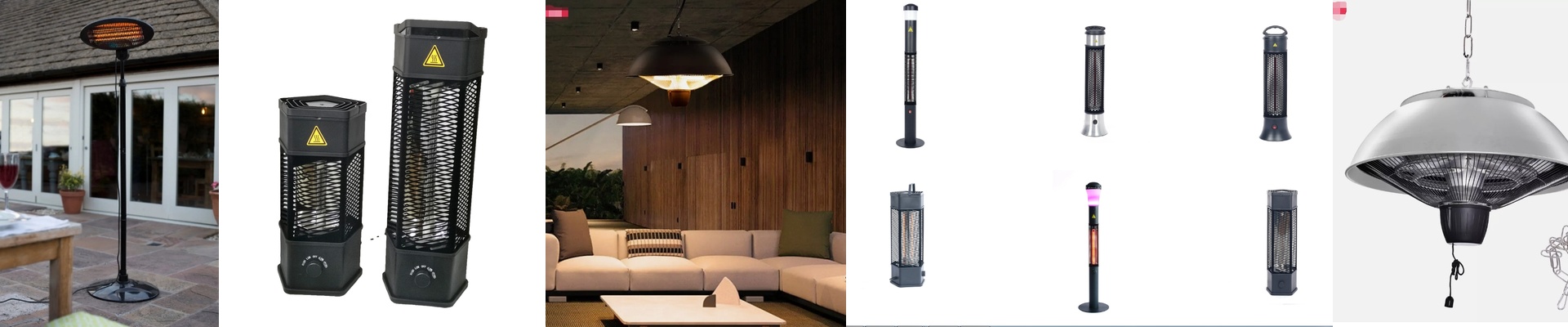
Let’s be honest: outdoor bars are a nightmare for heating equipment. Between the humidity, the salt air, and the inevitable drink spill, most heaters just give up. You end up with burnt-out filaments or a short circuit right when you need the heat most. We got tired of seeing that happen, so we built our infrared heaters to actually survive the elements. We focused specifically on two things: the seal and where the quartz tube meets the frame. Here’s the thing about moisture. It’s not just about leaks. When a freezing cold quartz tube jumps to 600°C in a humid breeze, you get condensation. If that moisture sneaks into the housing, it leaves behind mineral deposits. Those create hotspots on the glass, and eventually, the tube just cracks. To stop that, we used a sealed chassis. It has specific vents that let the heat out but keep the dampness away. It keeps the optics clean and, more importantly, keeps the tube from popping under the pressure. Then there’s the wiring. Most heaters fail at the connection point. We use IP-rated gaskets and sealed cable entries to stop water from creeping into the guts of the machine. By keeping the power terminals isolated from the outer shell, we avoid those nasty electrical arcs you see in the cheap stuff. You can hit these with a rainstorm or a cleaning hose and the circuit stays rock solid. Now, there is a trade-off. Because the seals are so tight, you don’t get as much natural airflow as you would with an open-frame heater. Because of that, you’ve got to make sure you leave enough room around the unit when you mount it. If you crowd it too much, the housing can get too hot. We built these for high-traffic commercial patios. We wanted to get rid of the constant degradation caused by weather so you aren’t replacing tubes every few months. You wire it up once. Then you just forget about the weather and get back to running your business.