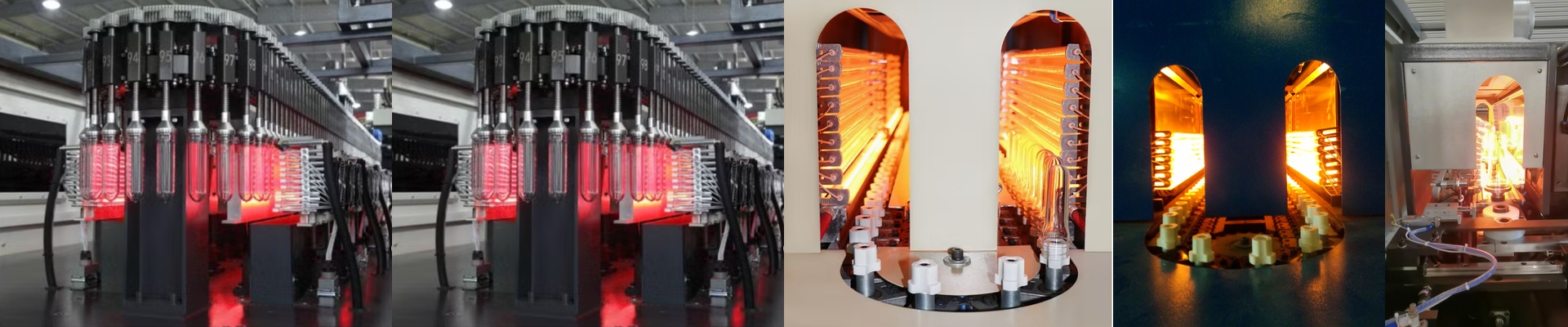
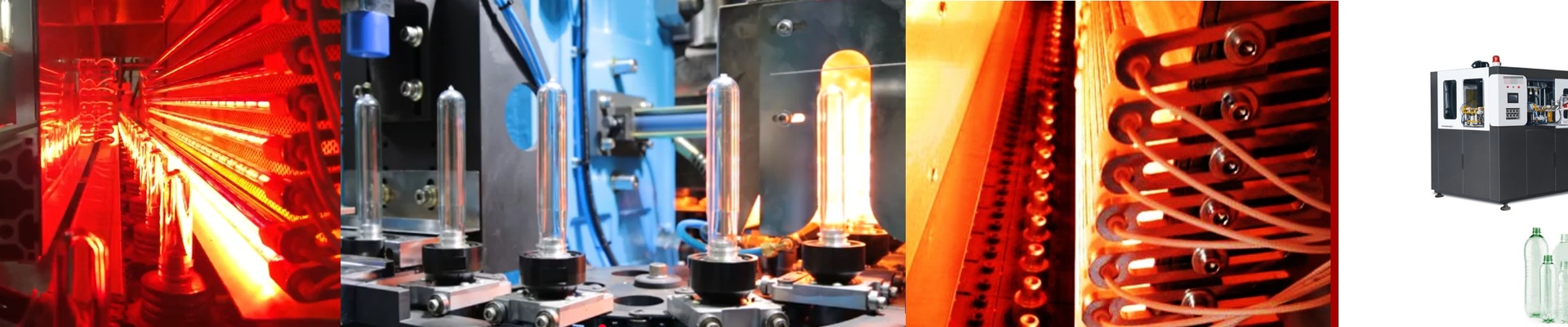
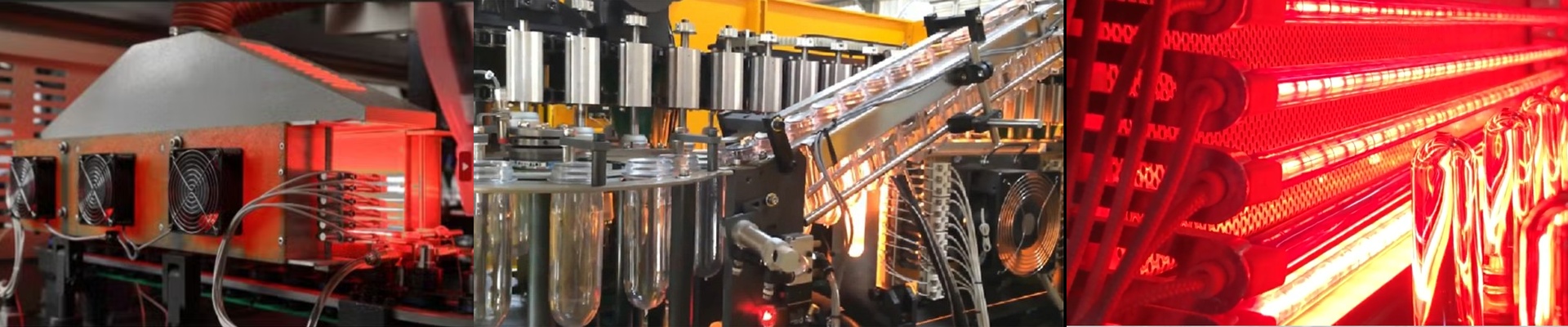
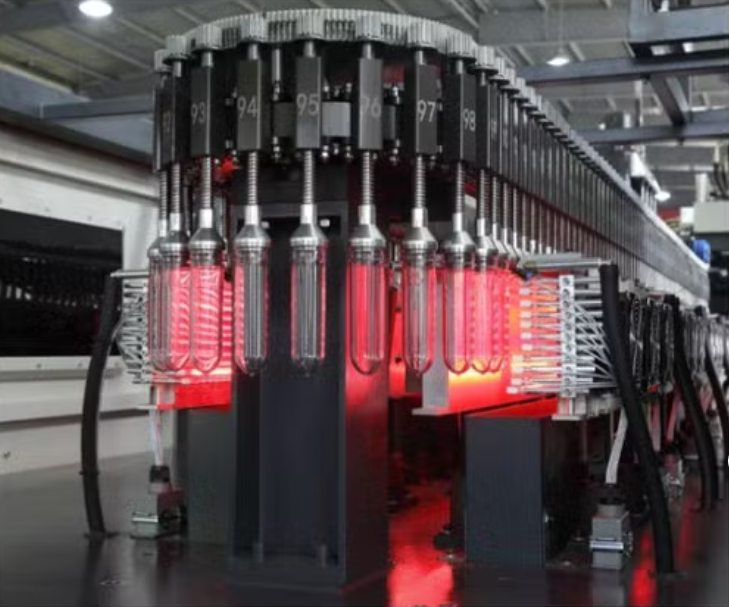
On the blow molding floor, preform heating temperature drift is the quiet culprit behind off-spec bottles, excessive regrind, and the kind of downtime nobody budgets for. When the heating tunnel can’t hold a tight thermal profile, you end up chasing viscosity across cavities, and stretch ratios fall apart. We built our infrared heating upgrade to tackle that instability where it starts: temperature control, because everything downstream follows that lead.
What matters, technically
We lock the preform heating window with repeatable emitter control. Our short-wave infrared quartz emitters respond fast and hold output steady, giving ±1°C control in the heating tunnel when you pair them with closed-loop temperature monitoring. The system drops right in on mainstream blow molders—Sidel, Krones, SIPA, Husky, SACMI, and Nissei ASB—using standard R7s connectors and mounting geometry that matches the OEM. Each emitter is rated for 5,000+ hours, and in the field we see less than 5% output drop over that period, so the heating curve stays consistent between lamp changes.
Why it works in the real world
Tight temperature control translates to stable parison viscosity, which means stretch and wall distribution behave the same cycle after cycle. In production, that shows up as fewer thin spots, less breakage, and less scrap. Energy use drops because the emitter hits setpoint quickly and holds it without overshoot, and you cut down on maintenance calls by stretching the intervals between lamp replacements. The net result is more uptime and a more predictable cost per thousand bottles.
A few things to get right
Installation is straightforward, but the payoff hinges on matching your machine’s reflector geometry and airflow. If your tunnel runs variable conveyor speeds or you switch formats often, you’ll need to map the thermal profile and tune the zones accordingly. Infrared emitters don’t like uneven cooling—keep airflow even and avoid direct drafts on the quartz, or you’ll get localized cold spots. Plan on a short commissioning run to nail the setpoints and confirm bottle quality against your existing control limits.