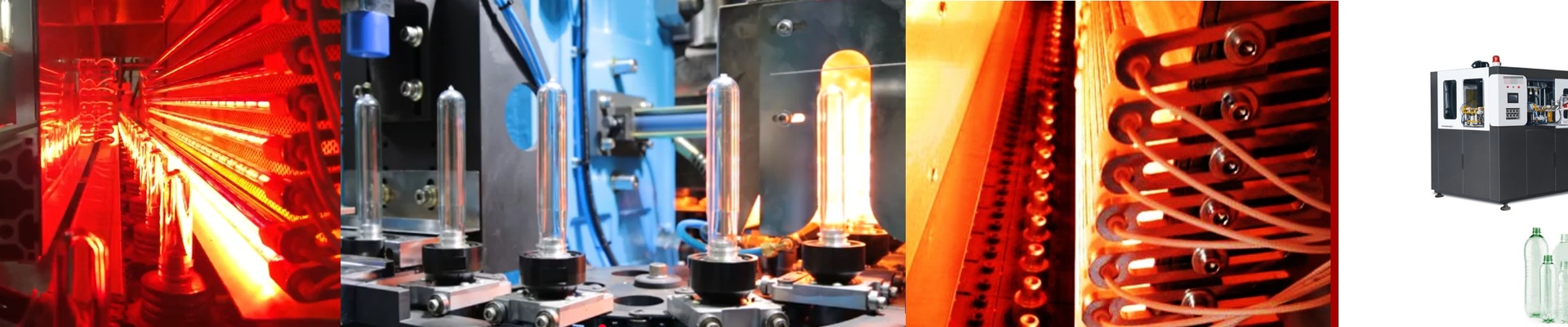
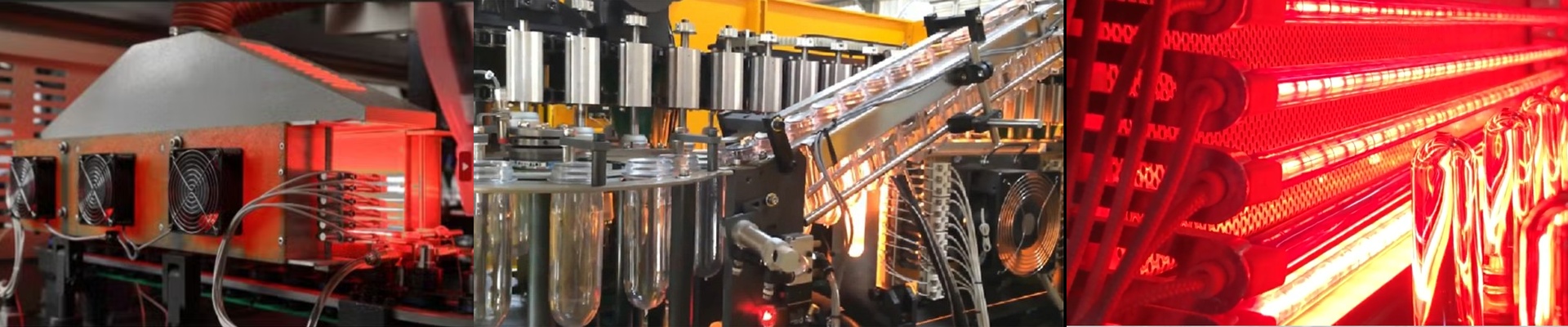
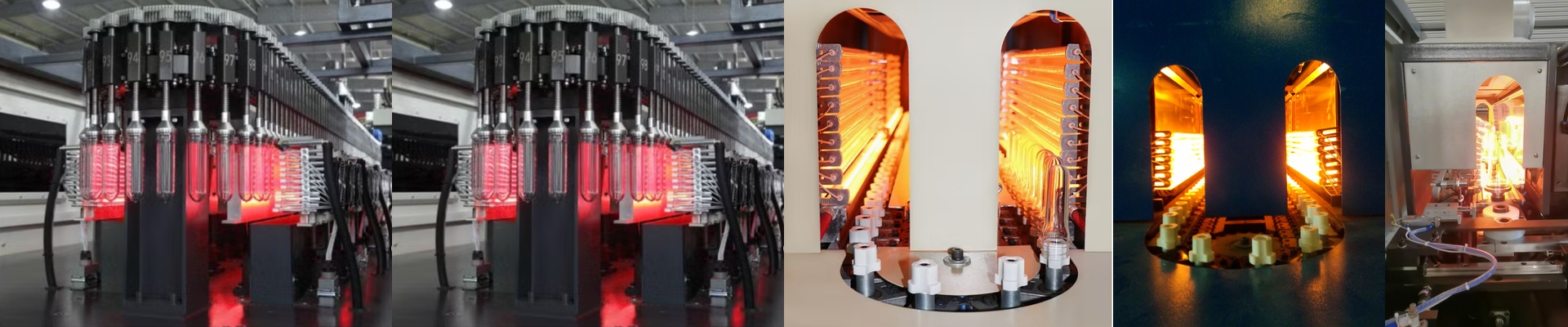
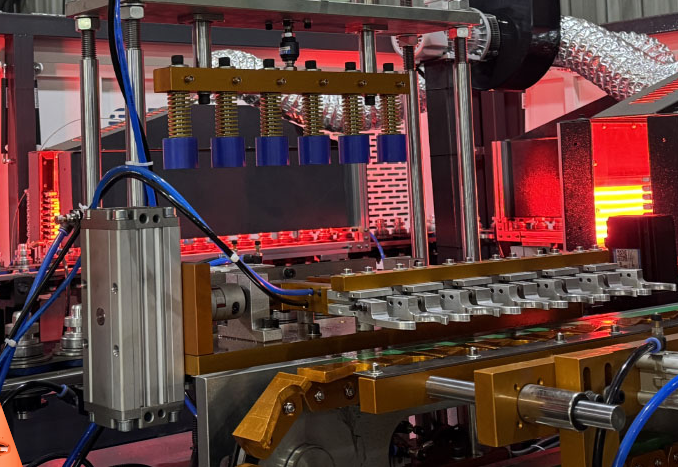
On the blow molding line, preform heating isn’t a guessing game. If the heating tunnel is running hot or cold, you’re looking at thin walls, blown seams, and entire batches that get scrapped. We built the 1200mm carbon infrared lamp as a straight swap for OEM emitters—no compromise—so you can keep your heating profile, your control logic, and the same machine behavior.
What matters, technically
This 1200mm carbon infrared lamp was designed to fit the dimensional and electrical footprint of mainstream blow molders. Overall length is 1200mm, with 1000mm of active heating length, and it uses an R7s connector for a direct drop-in. Rated at 1.5kW and running at 230V (with 220V/240V variants available), it puts out the same density you expect from OEM emitters. The carbon filament gives you a broad infrared spectrum, heating PET preforms quickly and evenly, and the quartz envelope handles the thermal shock that comes with fast cycling.
Why it works in the real world
In stretch blow molding, cycle stability starts in the heating tunnel. This lamp matches the OEM parameters used on Sidel, Krones, SIPA, Husky, SACMI, and Nissei ASB machines, so your PID settings and lamp spacing can stay exactly where they are. The payoff is repeatable wall distribution, fewer pinholes, and less downtime spent chasing temperature drift. We’ve seen these lamps hold output within 3% over 5,000+ hours, which means fewer changeouts and more uptime. Energy stays under control because the emitter hits setpoint fast and holds it without overshoot.
What you need to know
Since it’s a direct-fit replacement, installation is straightforward: slide the lamp into the R7s socket, align the bracket, and double-check the reflector geometry. Give it time to reach thermal equilibrium, then run a short validation shot and confirm wall thickness distribution before you go full production. Keep the lamp and reflector clean—dust buildup shifts absorbed heat and moves the hot zone. And remember, ambient airflow around the heating tunnel can affect temperature uniformity; if you’re in a drafty spot, a quick draft shield or a small airflow reroute can keep localized cooling from sneaking in.