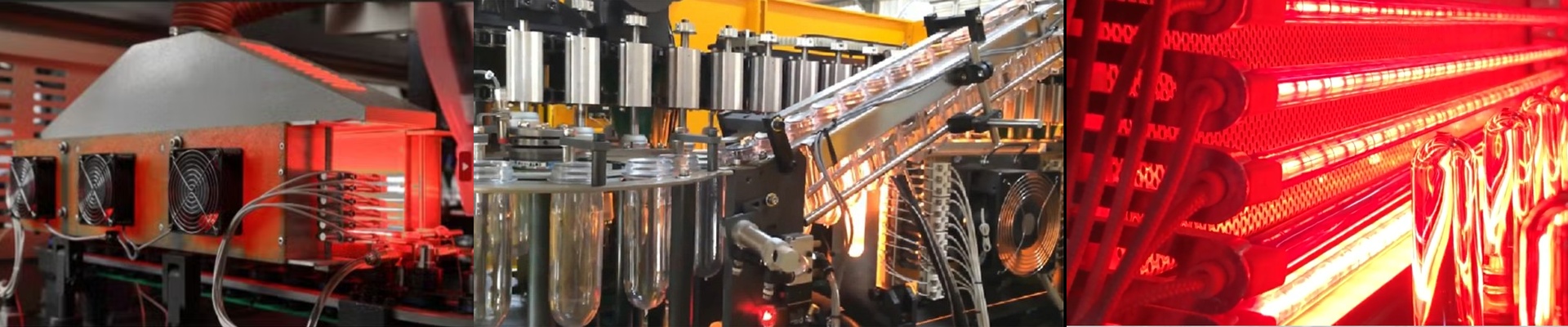
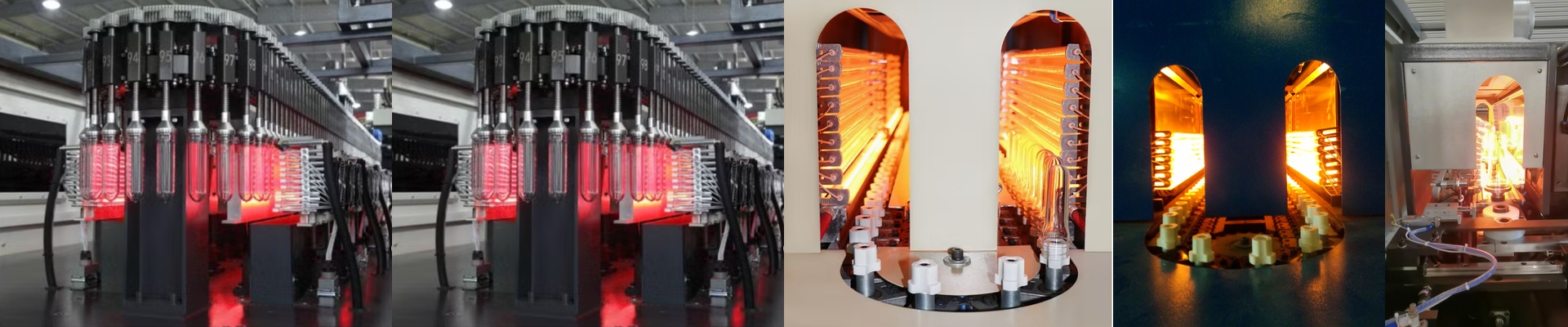
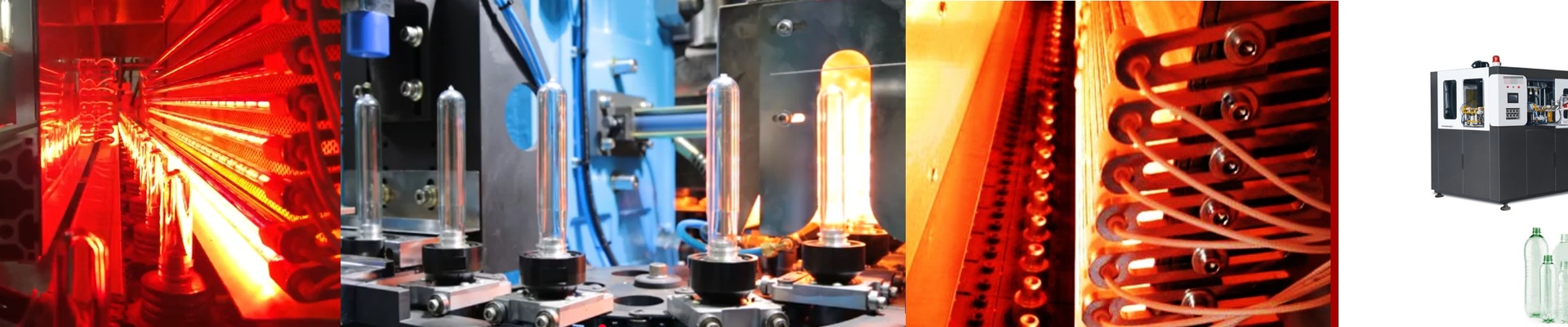
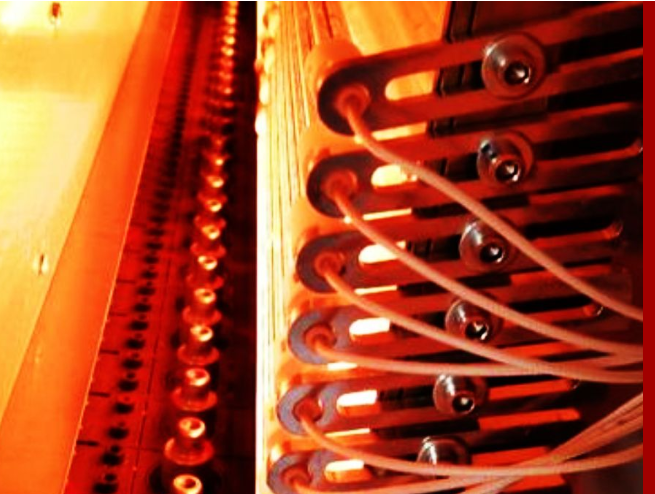
On the floor, the blow molder is a clock—every cycle counts. The preform has to land in a tight temperature window before it stretches. If the heating tunnel can’t deliver, you’re staring at weak bottles, short shots, or the worst: the line going idle while you chase the fault. Infrared is the fastest way to hit that preform temperature, but the system only works if the lamp socket does its job. Generic sockets that drift, oxidize, or lose contact turn a routine changeover into a recurring headache. We build high-temperature quartz lamp sockets for blow molding because the heating tunnel isn’t a place to improvise. You need repeatable contact, stable resistance, and consistent alignment so lamp output stays where you set it.
What matters, technically
Stretch blow molding with infrared relies on short-wave or medium-wave quartz halogen emitters. These lamps run hot—surface temps often top 800°C—and the socket has to live in that environment while carrying current and holding the lamp exactly in position. Our sockets are built around a high-temperature ceramic body and high-purity nickel or nickel-chromium contacts. We match the voltages you see in blow molding heating sections—120V, 230V, 240V—and the power densities the lamps demand. Connector options cover what the tunnel actually uses: standard R7s sockets for straight quartz tubes, plus bi-pin and other proprietary connectors found on OEM machines. The specs that translate directly into uptime:
- **Continuous operating temperature:**Rated for sustained exposure in the heating tunnel, where ambient can easily run well above 500°C.
- **Current handling:**Spec’d to carry the lamp load without measurable voltage drop at the contact.
- **Contact geometry:**Spring-loaded, self-aligning contacts that maintain pressure despite thermal cycling.
- **Dielectric strength and creepage:**Spacing engineered to reduce arcing and tracking in humid, high-heat plant conditions.
- **Mounting and alignment:**Fixed geometry that holds lamp position—no wobble, no drift. This isn’t about chasing a number on a datasheet. It’s about keeping resistance stable at the socket so lamp power stays repeatable shift after shift. When the socket is right, the heating profile doesn’t drift.
Why it holds up on real blow molding lines
A blow molding line—Sidel, Krones, SIPA, Husky, SACMI, Nissei ASB—lives or dies on the heating tunnel delivering uniform preform temperature before the blow station. The lamps, reflectors, and control system are only as good as the interface between the lamp and the power feed. A high-temperature quartz lamp socket keeps the line running in three practical ways. **It holds lamp position.**In the tunnel, distance between lamp and preform is the difference between a good bottle and scrap. If the socket lets the lamp shift, the hot spot moves, and you get uneven wall thickness. Our design locks the lamp in place so the heating geometry stays fixed. **It keeps contact resistance low.**Oxidation and micro-arcing at the socket end bleed power and make lamp output unstable. That shows up as inconsistent bottle weight, flash, or cycle delays while the control system chases temperature. Nickel-chromium contacts in a ceramic body resist oxidation, and spring pressure maintains the interface through repeated heat-up and cool-down. **It cuts unplanned maintenance.**In many plants, socket failure shows up as flickering lamps, alarms, or a sudden dead zone in the heat. That stops the line while someone troubleshoots and swaps parts. We engineer the socket to survive repeated thermal cycles, and we build it so it can be swapped quickly when it’s time for a lamp change. The payoff isn’t theoretical. It shows up as fewer interruptions, fewer lamp replacements caused by poor contact, and less time spent compensating for heating drift.
The details that trip people up
No component is above the environment it lives in. Here are the practical points to get right before you spec or replace. **OEM compatibility isn’t interchangeable on paper.**Blow molders from different manufacturers use different lamp lengths, wattages, and connector styles. Even within a brand, older and newer models can differ. Before you order, confirm the exact lamp type and the socket footprint on your machine—R7s, bi-pin, or the OEM-specific connector—and verify voltage and wattage per zone. **Alignment is critical.**A socket that’s misaligned or mounted loosely will let the lamp rotate or shift. That changes the distance to the preform and can create hot spots. Use the correct mounting hardware and check alignment during installation. **Thermal cycling wears things out.**Repeated heat-up and cool-down stress any socket. Keep the tunnel clean and make sure airflow isn’t blocked; excessive local heat accelerates contact oxidation and shortens service life. **Handle the lamp and socket carefully during changes.**High-temperature quartz lamps are fragile, and socket contacts can be damaged if lamps are forced or twisted during replacement. Use proper handling and follow the OEM procedure for lamp swaps. If you want to stop chasing intermittent lamp behavior and heating drift, start at the interface. Spec a high-temperature quartz lamp socket that matches the lamp, the machine, and the environment—then run the line the way it was designed to run.